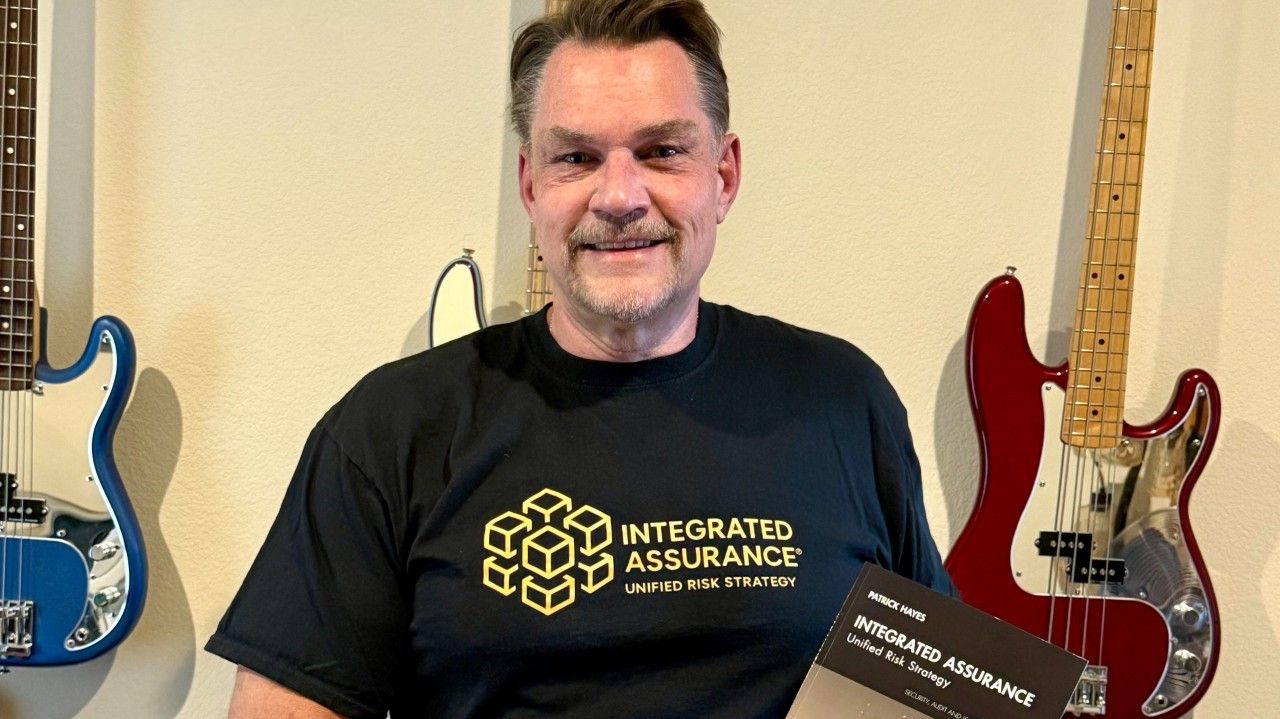
When I set out to write Integrated Assurance: Unified Risk Strategy, I imagined the finish line would be the day I held a printed copy in my hands. I thought of publishing as an endpoint. What I didn’t expect was how much the journey to publishing would teach me, and how releasing the book would feel less like finishing something and more like starting a new chapter.
As I release the book into the world, I want to share ten reflections that surprised me along the way. Each of them is something I didn’t anticipate when I first began writing, and each has left me more grateful for the people and conversations that carried this work forward.
1. The conversations began before release
I assumed most people wouldn’t engage until the book was out. Instead, even early drafts sparked dialogue. Colleagues asked questions about how Integrated Assurance fits with their day-to-day operations. Executives wanted to know how it might help bridge communication gaps with their boards. Regulators and practitioners challenged parts of the model and pressed for clarity. I didn’t expect a manuscript still in progress to generate so much conversation. It showed me that the need for this discussion was already out there, waiting for a catalyst. The book, even before it was finished, gave people a way to start asking different questions about assurance.
2. Executives asked for it
When I sat down to write, I pictured CISOs, compliance leaders, and risk managers as the main readers. To my surprise, CEOs, CFOs, and board members reached out, asking when they could read it. They were looking for a way to connect business outcomes with security and resilience. It confirm for me that assurance isn’t just a back office responsibility, it belongs in the boardroom. That realization gave me a sense of responsibility to write in a way that would speak across audiences, not just to specialists.
3. Pushback came early
When I shared ideas with peers, not everyone agreed. Some pushed back on my critique of traditional assurance models, suggesting I was being too hard on established frameworks. At first, the pushback unsettled me. I wondered if I had gone too far. But as I listened, I realized the tension itself was valuable. It meant the ideas were striking a nerve, and that resistance was a sign of relevance. If everyone nodded politely, the book would have been forgettable. Instead, the friction created better conversations and stronger arguments. I didn’t expect criticism to feel like progress, but it did.
4. IAMM traveled without me
Long before publication, pieces of the book started circulating because of the long journey of Integrated Assurance I have been on. Slides from early talks I gave over the past 10 years made their way into industries and regions I hadn’t personally worked in. Leaders in those places began interpreting IAMM through their own realities. Watching ideas travel on their own was humbling. I realized that once you put an idea into the world, you can’t control where it goes, and that’s a good thing. The framework was meant to be shared, reshaped, and applied in new ways.
5. AI became the center of the discussion
When I wrote about AI as a threat vector, I thought of it as a forward-looking section and something that would matter in a few years. By the time the book was ready for release, AI had already become the center of the risk conversation. Organizations are already grappling with attacks powered by AI, regulatory concerns, and cultural questions about trust. The timing showed me how quickly a future issue can become today’s urgent challenge. I didn’t expect the book to feel more current on release than it did when I started writing, but that’s exactly what happened.
6. Students and educators leaned in
One of the most surprising and rewarding parts of the journey was hearing from professors who wanted to use the material in their courses. They saw value in teaching students that assurance is not just about compliance paperwork, but about culture, resilience, and business alignment. Students, in turn, asked thoughtful questions about how assurance can be lived in daily practice, not just checked off in audits. I didn’t expect the classroom to embrace the book so quickly. Knowing it might help shape the next generation of leaders gave me a renewed sense of purpose.
7. It created unexpected demand
Even before publication, organizations began asking for roadmaps and guide books. They wanted practical ways to apply the ideas, not just to read about them. What started as a writing project 10+ years ago quickly became an opportunity to share a useful maturity model. I didn’t anticipate the book serving as a bridge to action, but it did. It was both humbling and exciting to see that people weren’t just interested in the theory, but ready to turn it into practice.
8. The human side mattered most
I expected readers to focus on the technical sections like the align use of frameworks, the mappings, and the maturity model. However, what resonated most in conversations, were the chapters about culture, trust, and resilience. Leaders told me those were the parts that clicked. It reminded me that technology and processes are only part of the story. The real heart of assurance is the trust people build with one another, the culture that makes resilience possible, and the leadership that brings it to life. I didn’t expect that emphasis to carry so strongly, but I’m glad it did.
9. Stories stuck more than models
As I tested ideas with early readers, I noticed that what stayed with them wasn’t the diagrams. It was the stories that gave those concepts life. For example, one story in the book describes how organizations often treat resilience as a compliance exercise, ticking boxes to satisfy audits while missing the lived reality of operational risk. That section struck a chord because it painted a picture everyone had seen before: a report that says “all green” while the organization feels anything but secure. The point wasn’t abstract at all. It was lived experience, and that made it memorable. I didn’t expect storytelling to matter more than technical precision, but it became clear that stories are what people carry forward.
10. Publishing is just the beginning
For a long time, I imagined that publishing the book would be the finish line. I thought it would feel like crossing something off my life’s bucket list. Instead, it feels like the start of something new. The release is not an ending, but an invitation to dialogue. I now see Integrated Assurance not as my book alone, but as a shared blueprint that others will challenge, adapt, and make their own. That’s the best possible outcome.
What’s Next
This is only the beginning. Book 2, Relevant Impact: A Field Guide for Integrated Assurance, is planned for release in 2026. While the first book lays out the strategy and framework, the field guide will be more hands-on. It will offer practical tools, case studies, and step-by-step methods for organizations of every size to apply Integrated Assurance in real time.
Where Unified Risk Strategy is the blueprint, The Field Guide will be the playbook. I hope it will serve as a companion for teams on the ground and something they can use not just to understand assurance, but to live it.