Ideas
Decision Debt
The accumulated consequence of reasonable decisions that were never revisited, and of decisions the organization no longer realizes it is making.
Most Decision Debt begins with a reasonable decision
Every organization carries decisions it has forgotten it made. A temporary workaround becomes permanent. An exception becomes a standard. A vendor selected for one purpose ends up holding a function nobody intended to outsource. None of these were mistakes when they happened, and most were correct given what was known at the time.
Decision Debt is what remains once those decisions stop being examined. Like financial debt, it is not inherently harmful, and it is not free. It is serviced through reduced flexibility, weaker visibility and a growing gap between how the business is described and how it actually runs.
The distinction
Technical debt lives in technology. Decision Debt can live anywhere.
Technical debt usually describes the future cost created when technology choices favor speed or convenience over a more sustainable design.
Decision Debt is broader. It can begin with a technology choice, but it can also come from a vendor relationship, staffing decision, policy exception, acquisition, operating process, governance decision or temporary response to a business problem.
The important difference is that Decision Debt changes the conditions under which future decisions are made. A decision that made sense three years ago may still be shaping the organization long after the assumptions behind it have disappeared.
The organization is making more decisions than leadership can see
The more consequential shift is where decisions now originate. An employee choosing a tool, a vendor changing a subprocess, a software provider enabling a feature by default and an AI system selecting an action are all making decisions that alter the organization’s risk position.
Very few of those decisions pass through a governance process. They are usually invisible until something forces them into view, and by then the organization may have been operating on them for months or years.
The decisions that determine whether a business survives are rarely the ones on the agenda.
Recognizing the pattern
Decision Debt rarely looks dangerous while it is accumulating
Temporary becomes permanent
A workaround or exception remains after the condition that justified it disappears.
Ownership becomes unclear
Systems, integrations and decisions remain in place after the people responsible for them move on.
Assumptions expire
The business changes while decisions based on earlier conditions remain embedded in operations.
Capabilities become dependencies
A tool, vendor or process adopted for convenience becomes something the business can no longer operate without.
Decisions become automated
Systems and AI increasingly make or shape operational choices without an obvious path for reviewing the assumptions behind them.
AI
AI doesn't just accelerate decisions. It can accelerate Decision Debt.
AI changes the scale and location of decision-making. Decisions that once required a person may now happen continuously inside systems. Vendors can introduce AI into services the organization already depends upon. Models can influence priorities, approvals, recommendations and operational actions without those decisions appearing in traditional governance processes.
The concern is not simply whether the AI is accurate or secure. Leadership also needs to understand which decisions have moved into these systems, what assumptions those decisions depend upon and whether anyone is responsible for revisiting them as conditions change.
Business Survivability
Disruption often reveals Decision Debt that was already there
Decision Debt can remain almost invisible while normal operations continue. The organization adapts around it. People learn workarounds. Dependencies become familiar. Exceptions become part of the operating environment.
Disruption changes that. When a vendor fails, a system becomes unavailable, an assumption proves wrong or leadership needs to change direction quickly, decisions accumulated over years can suddenly constrain the organization’s options.
Business Survivability is partly about understanding those conditions before the organization has to depend upon them.
You don't eliminate Decision Debt by adding another control
Decision Debt is reduced by returning to a small number of consequential decisions and asking whether they would be made the same way today.
That begins with understanding what the business now depends upon, why those dependencies exist, what assumptions supported the original decisions and whether ownership still exists for revisiting them.
The objective is not to reconsider every decision the organization has ever made. It is to identify the decisions that now shape how the business operates and determine whether they still make sense.
Start here
Some useful questions
What decisions are we still living with that nobody would deliberately make today?
Which temporary exceptions have quietly become permanent?
What does the business depend upon that no executive consciously decided to depend upon?
Which important decisions have moved to vendors or platforms?
Where is AI now making or influencing decisions that people previously made?
Which assumptions behind major decisions have not been revisited as the business has changed?
If we needed to change direction quickly, which old decisions would constrain us?
Related work
Related books
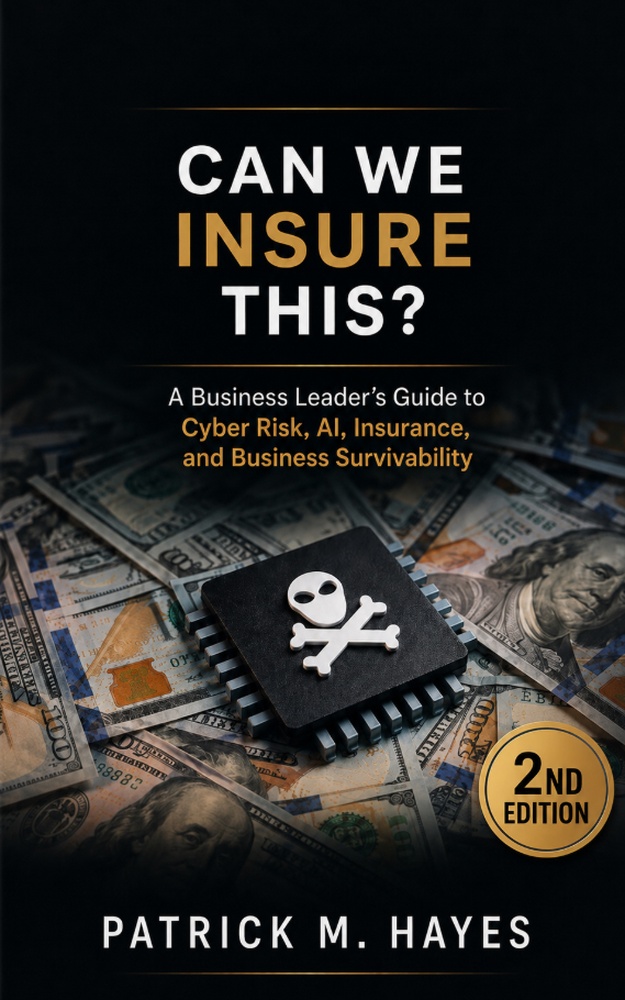 Can We Insure This?
A Business Leader's Guide to Cyber Risk, AI, Insurance, and Business Survivability
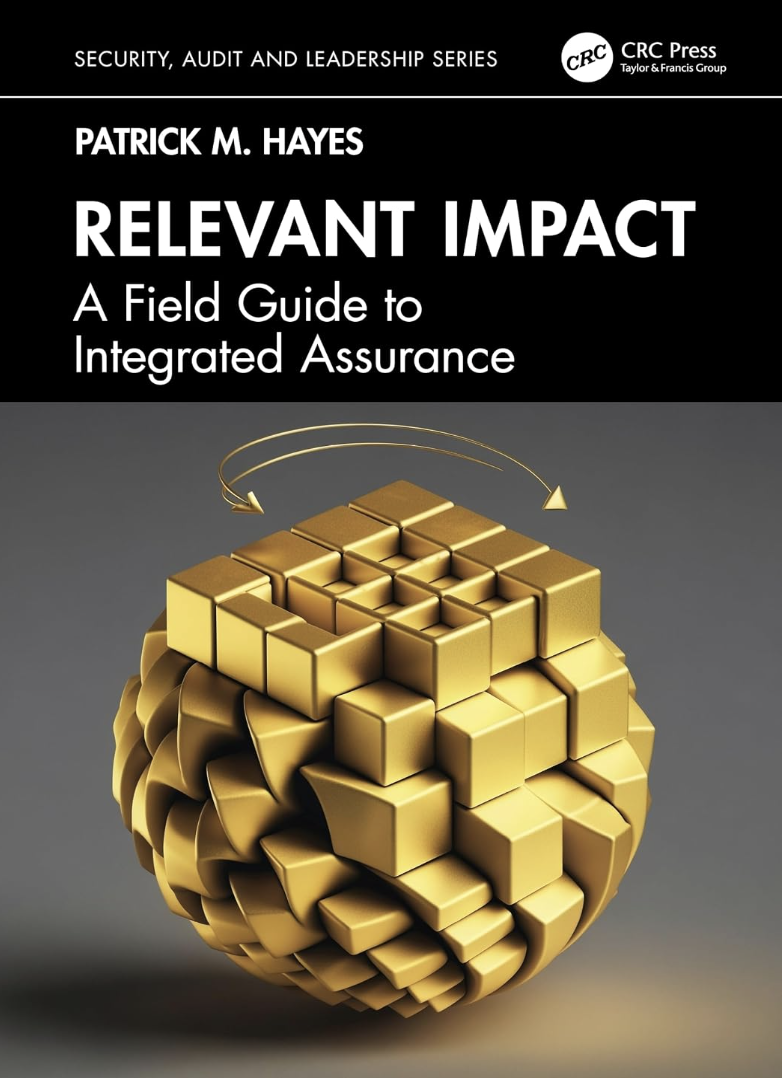 Relevant Impact
A Field Guide to Integrated Assurance
Related thinking
- Decision Debt Is The Risk AI Will Expose Faster Than We Expect
September 21, 2026 · 5 min read
- When a Temporary Fix Becomes a Real Risk
April 22, 2026 · 3 min read
- Complexity Doesn't Arrive Overnight
July 7, 2026 · 2 min read
Continue through the ideas
Business Survivability
Whether a business can keep operating when critical assumptions, systems, people or dependencies fail.
Integrated Assurance
An operating model that lets leadership see risk across boundaries instead of one function at a time.
Operational Trust
The untested assumptions about systems, people and vendors that daily operations quietly depend on.
AI and Organizational Risk
How AI moves decisions into places the organization cannot observe, explain or govern.