Ideas
AI and Organizational Risk
The significant risk in AI adoption is not the technology itself. It is what happens when decisions move into systems the organization cannot fully observe, explain or govern.
The shift
AI is changing more than the technology
Most AI conversations begin with the model. Is it accurate? Is it secure? Can its output be trusted? Those questions matter, but they begin too late.
AI changes how work gets done. It can recommend an action, prioritize a transaction, select a customer, classify an event, change a workflow or make a decision without anyone thinking of it as a decision.
The organizational risk begins when those capabilities change how the business operates faster than leadership understands what has changed.
The central idea
AI risk rarely lives in the model. It lives in the decisions the organization has quietly stopped making itself.
A model can perform exactly as designed and still introduce risk into the business.
The important question is what authority the organization has allowed the system to exercise. What can it recommend? What can it decide? What can it change? What happens downstream when its output is accepted?
As more decisions move into software, platforms and automated processes, leadership can lose visibility into how consequential choices are actually being made.
The AI you know about may not be the AI changing your business
Most organizations underestimate their AI footprint because much of it arrived through software they already bought.
Features are enabled by default. Capabilities are added in releases. Vendors introduce AI into existing services. Employees begin using tools before a formal review occurs.
This is not primarily a governance failure by any individual. It is what happens when technology changes faster than the processes designed to evaluate it.
The AI inventory describes what the organization knows about. The operating model reveals what it actually depends on.
Third-party risk
Your vendors are making AI decisions too
An organization inherits the AI decisions of its vendors as well as its own. A provider can introduce AI into its operations and change the behavior of a service the business depends on, often without a contractual trigger and usually without a notification anyone reads closely.
That creates an unusual form of dependency. The organization may not have selected the model, approved the use case or even know that AI is involved, yet its operations may depend on the resulting decisions.
AI introduced into an existing product
A capability appears through a product update without a new procurement or risk review.
Data moves into new processing paths
Information begins flowing through AI features that were not contemplated when the original service was approved.
Outputs influence business decisions
Vendor-generated recommendations or classifications begin affecting operational choices without a clear record of how they were produced.
Vendor automation changes behavior
A provider changes how its service operates while the customer continues relying on assumptions established under the previous model.
Concentration becomes harder to see
Multiple vendors may rely on the same underlying models, infrastructure or AI providers, creating dependencies that are invisible when each vendor is assessed separately.
Decision Debt
AI can create decisions faster than organizations can revisit them
Organizations already carry decisions that made sense when they were made but were never revisited as conditions changed. AI can accelerate that problem.
A recommendation becomes a default. A default becomes automation. Automation becomes part of the operating model. Eventually the organization may depend on a decision process nobody deliberately designed in its current form.
The issue is not simply whether the AI made a good decision. It is whether leadership still knows which decisions are being made, why they are being made that way and whether the assumptions behind them remain valid.
Operational Trust
AI changes what the organization is being asked to trust
Every organization operates on assumptions about systems, information, people and vendors. AI introduces another layer because the reasoning behind an output may be less visible than the systems organizations are accustomed to operating.
That does not mean every AI decision must be independently verified. It means the organization should deliberately decide how much authority an AI system can exercise and what evidence is appropriate given the consequence of being wrong.
Trust becomes an operating risk when the organization no longer realizes it is trusting something.
AI compresses the time between a decision and its consequence
Organizations have always made imperfect decisions. Historically, many of those decisions moved at human speed. Someone reviewed the request, approved the transaction or interpreted the information.
AI can remove some of that friction. That can create enormous value, but the same speed can allow a flawed assumption to influence thousands of decisions before anyone recognizes the pattern.
The question therefore changes from whether the system can make the decision to whether the organization can recognize and respond when the decision no longer produces the result it expects.
The operating model
AI risk crosses the boundaries organizations use to manage risk
An AI capability can simultaneously involve technology, cybersecurity, privacy, legal, procurement, operations, vendor risk and business leadership. Each function may understand part of the exposure while nobody sees the whole.
Integrated Assurance provides a way to relate those views without creating another centralized risk function. It helps leadership understand how the technology, the decision, the dependency and the business consequence connect.
Start here
The useful questions begin with the decision, not the model
Where is AI already influencing how work gets done?
Which decisions are now being recommended, shaped or made by AI?
Which of those decisions can materially affect customers, operations, money, people or risk?
What authority have we intentionally given AI, and what authority has it acquired through adoption?
Where are vendors using AI inside services the business already depends upon?
What assumptions are we making about the accuracy, availability and behavior of those systems?
How would we know when an AI-enabled decision process begins behaving differently than expected?
Who can intervene when it does?
A practical position
The objective is not to slow AI adoption
Organizations do not need perfect visibility before they use AI. They do need enough visibility to understand where consequential decisions are moving.
Sensible AI adoption requires knowing which decisions have moved, which of those decisions matter to continued operation and what evidence exists that they are behaving as expected.
That makes AI risk an operating question before it becomes a technology question.
Business Survivability
The question is not whether AI works. It is what the business now depends on because of it.
Business Survivability asks whether the organization can continue operating when an important assumption, system, person or dependency fails.
As AI becomes embedded in how organizations operate, some of those dependencies will inevitably involve decisions made or influenced by AI.
Leadership does not need to understand every model. It does need to understand which capabilities the business has quietly become unable to operate without.
Related work
Related books
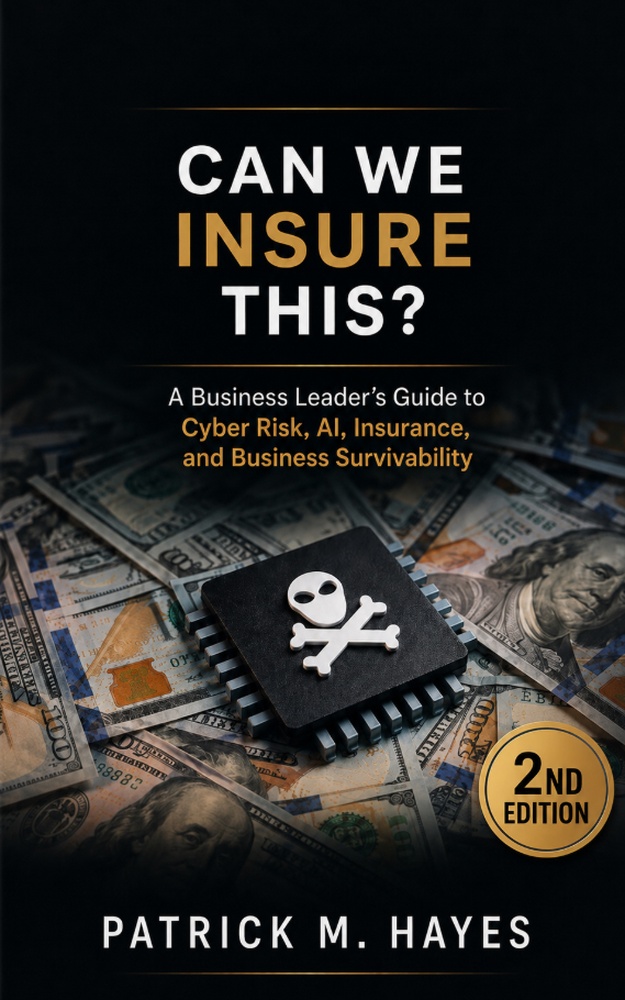 Can We Insure This?
A Business Leader's Guide to Cyber Risk, AI, Insurance, and Business Survivability
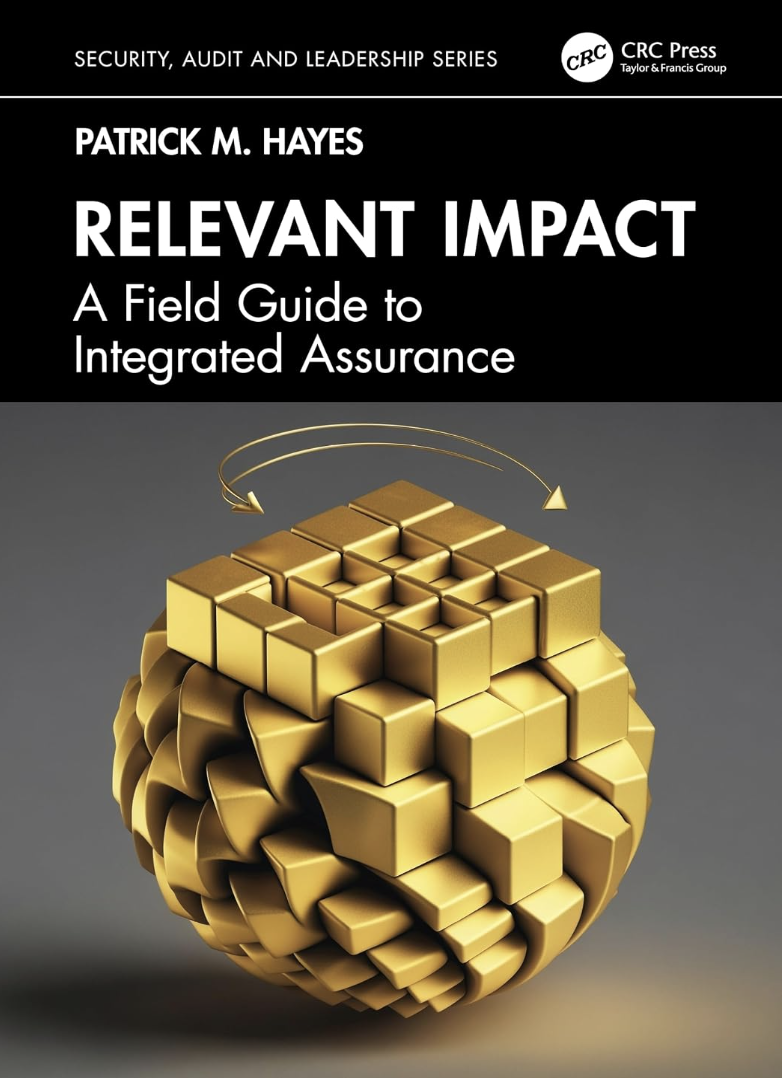 Relevant Impact
A Field Guide to Integrated Assurance
Related thinking
- Who Approved the AI That Your Vendors Are Using?
September 24, 2026 · 11 min read
- AI Is Changing Your Business Faster Than You Think
July 28, 2026 · 2 min read
- AI Makes Competence Harder to See
June 17, 2026 · 4 min read
Continue through the ideas
Business Survivability
Whether a business can keep operating when critical assumptions, systems, people or dependencies fail.
Integrated Assurance
An operating model that lets leadership see risk across boundaries instead of one function at a time.
Decision Debt
The accumulated cost of reasonable decisions that were never revisited, and of choices now made elsewhere.
Operational Trust
The untested assumptions about systems, people and vendors that daily operations quietly depend on.