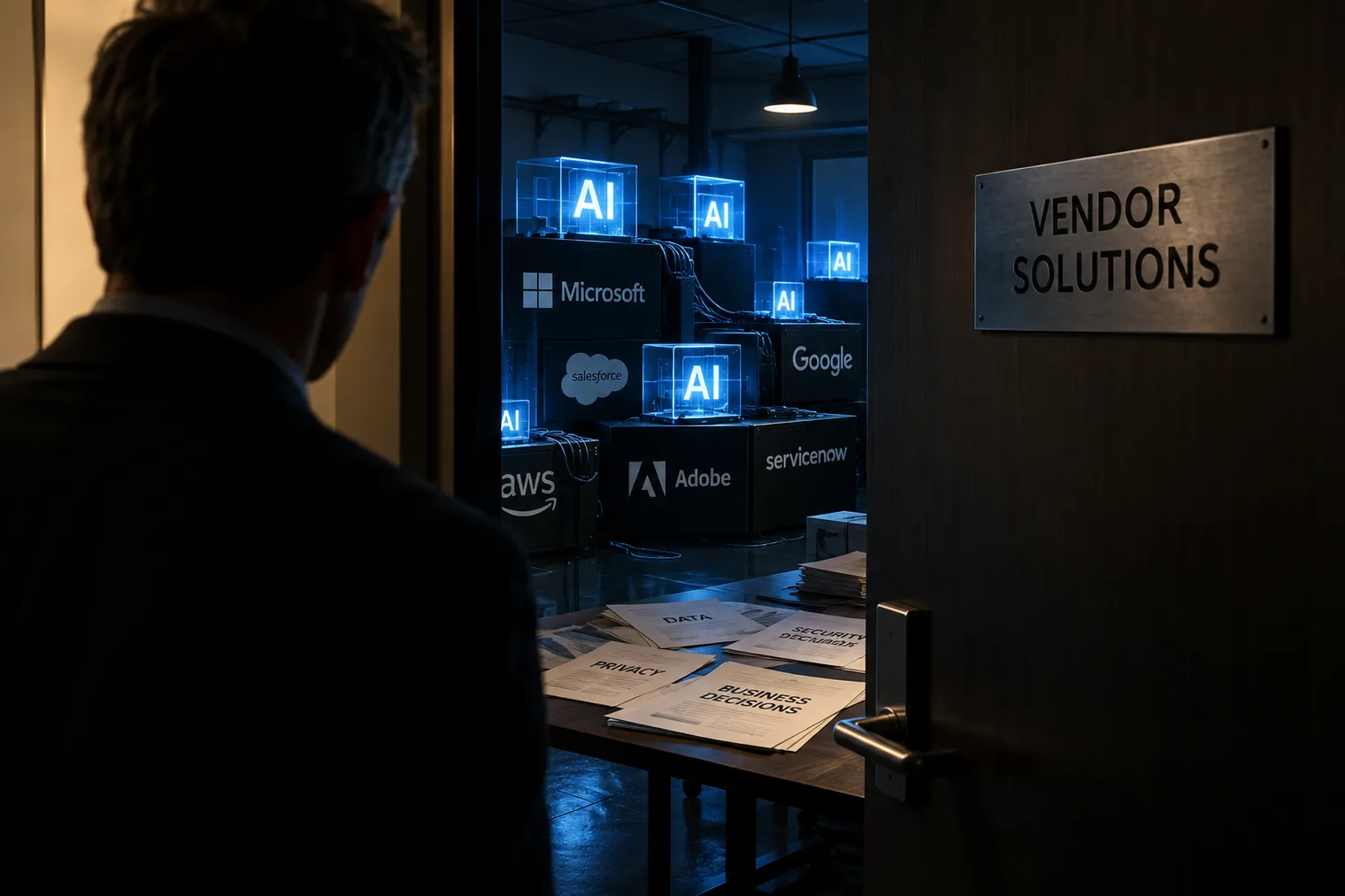
Most organizations are spending a lot of time trying to figure out how they want to use AI. They are developing policies, deciding which tools employees can use, looking at privacy concerns and trying to determine where AI makes sense in the business. Much of that work assumes the organization has some control over the decision to use AI, but that assumption is becoming less realistic as technology vendors add AI to products and services that companies have already been using for years.
Sometimes the change is obvious because the vendor announces a new AI capability and asks customers to enable it. In other cases, AI simply becomes another feature in an existing product. A reporting platform may start generating analysis, a CRM may summarize customer conversations, or a security product may change how it prioritizes alerts. The organization didn't necessarily make a conscious decision to adopt AI in any of these situations. It continued using technology that had already been purchased, approved and integrated into the business.
That creates a problem because the technology originally evaluated may no longer be the technology the organization is using today. The vendor relationship may be the same, the contract may still be in place and employees may continue interacting with the product in much the same way. What can change is how the product operates, what happens to company information once it enters the service and how much influence the technology has over decisions being made inside the business.
When the Vendor Changes the Product
Third-party risk programs generally evaluate a vendor based on what is known when the relationship begins. The organization looks at the service being provided, the information the vendor can access, the security controls protecting that information and the contractual requirements surrounding the relationship. Depending on the organization and the importance of the vendor, some form of reassessment may happen periodically.
AI makes that approach more difficult because a great deal can change between assessments. A product approved several years ago may now contain capabilities that did not exist when the original evaluation took place. Those capabilities may involve additional technology providers or change the way company information is processed. They may also provide recommendations that employees begin relying upon without anyone considering whether that represents a meaningful change in the way the product is being used.
The fact that the product is already inside the organization makes these changes easy to overlook. There is no new procurement process when an existing vendor adds a feature to a product you already license, and there may be no reason for security, legal, privacy or risk teams to become involved. The product owner may see the change as a useful improvement rather than something that changes the original risk decision.
This is why I think organizations need to look beyond whether a vendor simply says it uses AI. What matters is whether the product now operates in a way that changes something the organization previously understood about the relationship. If the answer is yes, some part of the original decision may need to be reconsidered.
How Vendor AI Creates Decision Debt
I have been writing about decision debt because I believe it becomes increasingly important as AI moves further into business operations. Decision debt develops when decisions and the assumptions supporting them remain in place while the environment around them changes. New decisions are eventually made based on earlier decisions that nobody has gone back to examine, even though the conditions that made the original decision reasonable may no longer exist.
Vendor AI makes this more complicated because the organization isn't making all of the decisions that contribute to that debt. A vendor may decide to incorporate another company's model into its product or change the way customer information is processed. An AI feature may become available through a routine product update and an employee may begin using it because it is already part of an approved application. None of these actions necessarily feels significant enough on its own to trigger a formal risk decision.
The problem develops as these changes accumulate. An organization may have a reasonably good inventory of the AI products it intentionally purchased while having far less visibility into AI that has become part of existing products. Over time, it becomes difficult to answer basic questions about where AI is being used, what company information it can access and whether people are relying on its output when making business decisions.
This creates a form of decision debt that is harder to recognize because part of it originated outside the company. The organization still owns the business consequences, but it may have had very little involvement in the decisions that changed the technology it depends upon.
Finding AI in Your Existing Vendor Environment
The first place I would look is at the vendors that are important to the operation of the business or that have access to information the organization considers sensitive. There is probably little value in immediately trying to identify every AI capability in every application. Understanding the important dependencies first gives the organization a much more manageable place to begin.
Those vendors should be asked whether AI or machine learning is currently being used in the services the organization receives. I would not limit the question to generative AI because vendors may use other forms of automated analysis or decision support that are just as relevant to the business. The organization should also understand whether those capabilities are optional, enabled by default or built into the service in a way that cannot reasonably be separated from the rest of the product.
Product release notes can provide useful information because vendors are introducing new capabilities constantly. Privacy notices and data-processing agreements should also be reviewed when important AI functionality appears because they may explain changes in how information is processed or identify additional companies involved in providing the service. The objective is to develop enough visibility to know when something important about an existing dependency has changed.
Understanding What the AI Actually Does
Once AI is identified, the evaluation needs to move beyond the fact that it exists. The business needs to understand what information the capability can access, what happens to that information and what role the resulting output plays in the business process. It is also important to know whether another company's model or infrastructure is involved, whether information is retained and whether customer information can be used for training or product improvement.
The consequence of an incorrect output also matters. An AI feature that creates an inaccurate summary of an internal meeting is different from one that incorrectly prioritizes a security incident or provides information that influences a financial decision. Looking at what happens when the technology is wrong provides a much more useful view of the exposure than trying to determine whether AI as a general technology is safe.
The amount of authority the technology has should be part of that evaluation. A system that provides information for a person to consider is different from one that can initiate an action without review. As vendors move from adding AI assistants to introducing more autonomous capabilities, this distinction will become increasingly important because the technology is moving closer to the actual execution of business decisions.
Compare Vendor AI With the Decisions You Have Already Made
Organizations also need to compare what the vendor is doing with commitments that already exist inside the business. Customer contracts may restrict how certain information can be handled, while privacy practices may create additional expectations. Regulatory requirements may apply to particular types of information or business processes. The organization may also have internal AI policies that limit uses that a vendor has now introduced into an existing product.
Cyber insurance can become part of this discussion as well. An organization may have made representations about security controls, data handling or third-party practices during the application process. If a vendor materially changes how a service operates, the organization should at least understand whether that change affects any of the assumptions behind those answers.
This is why asking whether a vendor's AI is secure doesn't answer enough of the question. A vendor can have reasonable security around an AI capability and still use that capability in a way that conflicts with your policies, contractual commitments or risk decisions. The issue is whether the vendor's use of AI is appropriate for the way your organization uses the service and the obligations that come with that use.
Deciding What Needs Additional Review
I don't believe every AI feature should trigger a lengthy governance process. That would create another administrative exercise that people eventually learn to work around. The level of review should be based on what has actually changed and what the business could reasonably lose if the technology doesn't behave as expected.
An AI capability that processes regulated information or influences a security decision probably deserves more attention than one used to help format an internal document. The same applies when AI interacts directly with customers, contributes to financial analysis or begins taking actions within an operational system. These situations matter because the organization is depending on the technology for something that can affect the business rather than simply using it as a convenience.
Someone inside the organization also needs to remain accountable for deciding whether that dependency is acceptable. The fact that the vendor chose to introduce AI does not remove the organization's responsibility for continuing to use the service. This does not mean the organization owns every failure of a vendor's technology, but it does mean the business needs to understand when the service has changed enough to reconsider its reliance on it.
Vendor Management Needs to Account for Continuous Change
Organizations should review whether their existing vendor agreements and management processes provide enough visibility into these changes. Many agreements were written around services that were expected to remain relatively consistent during the contract period, even though the products covered by those agreements may now change significantly several times a year.
For important services, organizations may want notification when AI materially changes how the service operates or how customer information is processed. They should understand whether information can be used for model training and whether additional providers become involved when AI capabilities are introduced. Depending on the service, the ability to disable an AI capability may also become relevant.
Responsibility when something goes wrong deserves attention as well. If an AI-generated recommendation contributes to a loss or confidential information is exposed through an AI capability, the existing agreement may not address the situation as clearly as the organization expects. Contract language will not eliminate the underlying risk, but it can at least make the responsibilities of each party clearer before a problem occurs.
AI Governance Has to Include Vendors
Most AI policies I have seen focus heavily on employee behavior. Organizations are deciding which public AI tools employees can use and what information can be entered into them. That made sense as an initial response because employee use was one of the first obvious ways AI entered the workplace.
The vendor environment now needs to become part of that same discussion. Procurement teams need to understand what questions should be asked when evaluating products that use AI, and technology owners need to recognize when an existing vendor introduces something that changes the original understanding of the service. Security, privacy, legal and risk functions should become involved when the change actually affects something they are responsible for rather than simply because a vendor used the term AI in a product announcement.
The process has to remain practical because organizations are going to see far too many AI-related product changes to treat every occurrence as a major event. The purpose should be to recognize the changes that affect business risk and make sure someone understands what changed before the organization becomes dependent on it.
Looking at Vendor AI Through Integrated Assurance
I see this as an Integrated Assurance issue because no single function inside the organization has enough information to evaluate the entire dependency. Security may understand how the technology is protected, while legal understands the contract and privacy understands the obligations surrounding the information. The business owner may know much more about how employees actually use the product and what would happen if it became unavailable or produced unreliable results.
Bringing those perspectives together provides a better understanding of the actual business exposure. It also helps move the conversation away from whether AI itself is good or bad and toward whether the organization understands what it is relying upon.
This also changes how we should think about assurance. A vendor assessment reflects what was known about a service when the assessment was performed. It shouldn't be treated as permanent evidence that the relationship remains acceptable regardless of how the product changes. AI is making that limitation more visible because capabilities are being introduced faster than many traditional vendor review cycles were designed to accommodate.
What Businesses Should Do Going Forward
I would begin with the vendors that the business depends upon most and determine where AI is already being used within those relationships. The next step is understanding whether anything has changed about the information those vendors can access or the role their products play in business decisions. That information can then be compared with existing policies, contractual obligations and the assumptions made when the vendor was originally approved.
Where something material has changed, the organization can decide whether the existing risk decision still makes sense. That may result in accepting the change, modifying a configuration, disabling a capability, asking the vendor for additional information or reconsidering part of the relationship. The appropriate response will depend on what the technology does and how important that dependency is to the business.
Going forward, these questions should become part of normal vendor management. AI should be considered when new vendors are evaluated and when important existing products change. Organizations also need a reasonable way for technology owners to raise a concern when a new capability appears to change how a service operates or how company information is handled.
Technology vendors are going to continue adopting AI, and much of what they develop will probably provide real value to their customers. The risk is assuming that a vendor's decision to adopt AI has no effect on the organization simply because the organization did not make the decision itself. Decision debt has traditionally been created through choices made inside the business, but that boundary is becoming less clear. As AI becomes embedded in the technology companies already depend upon, decisions made by vendors can become part of the organization's operating environment without ever being treated as internal decisions. Understanding when that happens is becoming an important part of understanding the risk the business has actually accepted.