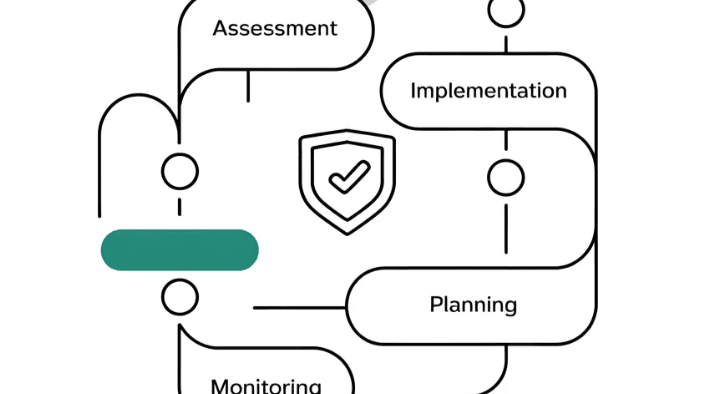
Adopting the Integrated Assurance Maturity Model (IAMM) is not a single project, nor is it an initiative that can be completed within a fixed timeframe. It is a transformation that requires leadership vision, organizational alignment, and cultural reinforcement. Enterprises that succeed in adopting IAMM recognize that assurance must be woven into daily operations, system architectures, risk frameworks, and decision-making processes. They also recognize that the transformation must be intentional and sustained.
This section provides practical recommendations for how organizations can adopt IAMM effectively. These recommendations are grounded in experience from large enterprises that have sought to unify cybersecurity, IT operations, risk management, and governance into a cohesive capability. The focus is on pragmatic steps that build momentum, overcome resistance, and embed assurance into the fabric of the enterprise.
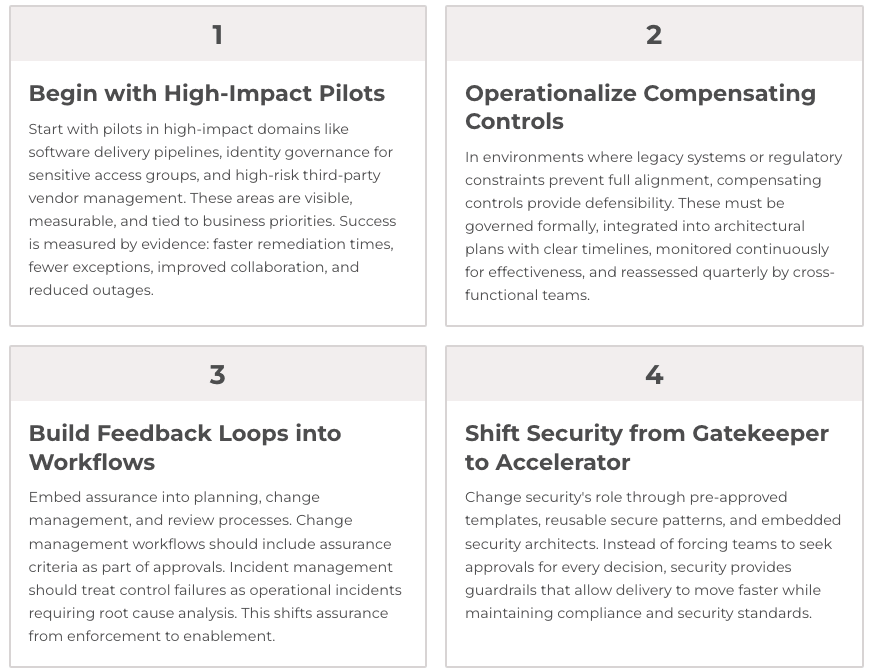 Cultural Transformation
Adoption will fail if assurance is seen as extra work. Performance evaluations should include assurance metrics, ensuring accountability. Recognition programs should highlight cross-functional achievements. Dashboards should display positive outcomes, not just failures, so teams see progress. Champion programs can identify individuals who model assurance behaviors.
Many adoption challenges arise because teams use different language to describe risk. IAMM adoption requires establishing a shared risk vocabulary with standardized terminology, control classifications, and accountability models. Cross-functional simulations reinforce this vocabulary through tabletop exercises and incident simulations.
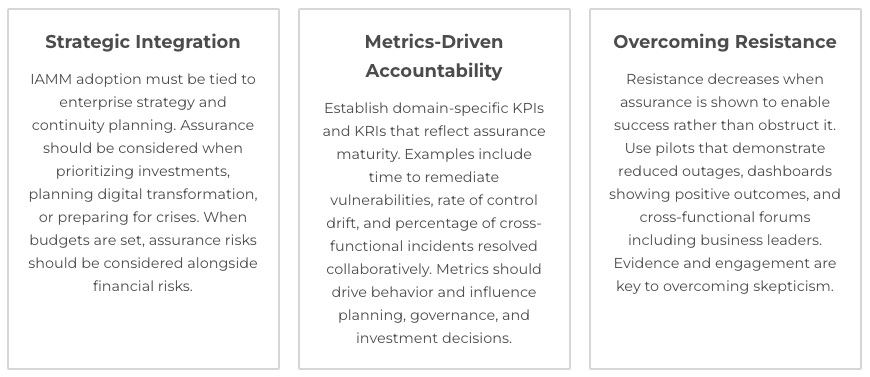 Adopting IAMM is a journey that requires vision, persistence, and adaptability. It cannot be rushed or delegated entirely to one function. It must be embraced across the enterprise, reinforced by leadership, and embedded into operations.
By following these recommendations, organizations can adopt IAMM in a way that is sustainable and impactful. Assurance will move from being a compliance exercise to being a cultural norm. It will become part of how the enterprise operates, learns, and grows. The transformation requires intentional effort, but the result is an organization where assurance enables innovation rather than constraining it.