Culture and collaboration are the most human elements of assurance. Technology can enforce controls, governance can define priorities, and operations can embed resilience, but without the right culture and collaborative behaviors, these efforts rarely sustain. Assurance is achieved when employees at every level understand their role in managing risk, when cross-functional teams work together to address shared challenges, and when leaders reinforce that assurance is part of how the enterprise succeeds.
The Culture & Collaboration Domain within IAMM recognizes that lasting assurance requires more than technical practices. It requires values, behaviors, and shared responsibility. Culture determines whether employees view assurance as someone else's job or as part of their daily work. Collaboration ensures that business units, IT, security, compliance, and other functions work together rather than in isolation.
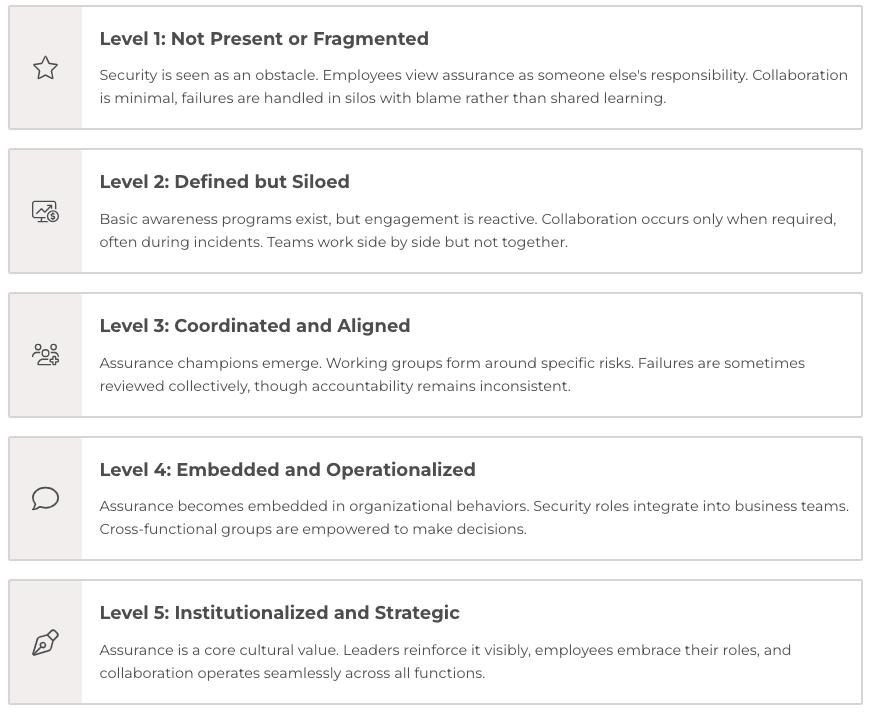
 The Five Levels of Cultural Maturity
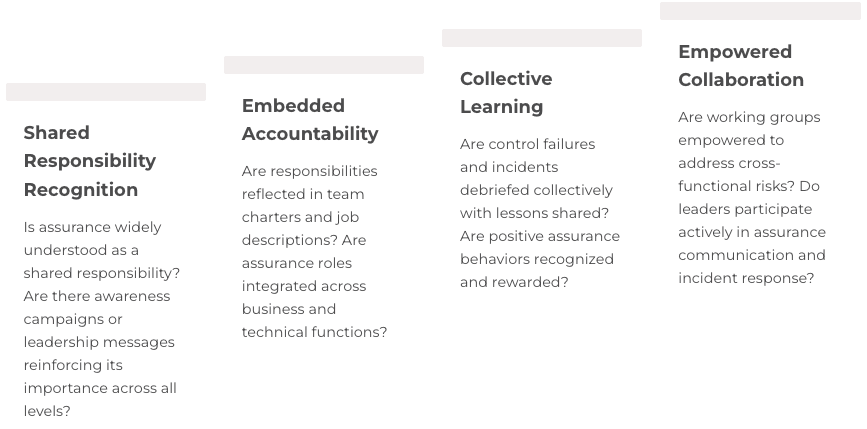
 Measuring Cultural Maturity
To assess cultural maturity and collaborative strength, organizations should evaluate key indicators that reveal whether assurance is viewed as an external requirement or as part of enterprise identity. These assessments help identify gaps and opportunities for advancement.
 Overcoming Cultural Barriers
Organizations often face cultural resistance when advancing this domain. Employees may view assurance as extra work rather than part of their role. Security teams may act as enforcers instead of partners, while leaders may fail to model assurance behaviors.
Functional silos are deeply entrenched in many enterprises. Teams may lack shared language or incentives for working together. Cross-functional groups may be created but not empowered to make meaningful decisions.
Strategic Value and Transformation
At higher levels of maturity, culture and collaboration transform assurance from a compliance exercise into a strategic capability. When assurance is part of culture, employees act in ways that reinforce resilience without being told. They escalate risks, follow processes, and support controls because they see the value.
When collaboration is strong, cross-functional responses are fast, coordinated, and effective. Risks are addressed holistically, and opportunities are pursued confidently. The cultural value extends externally to customers, regulators, and partners
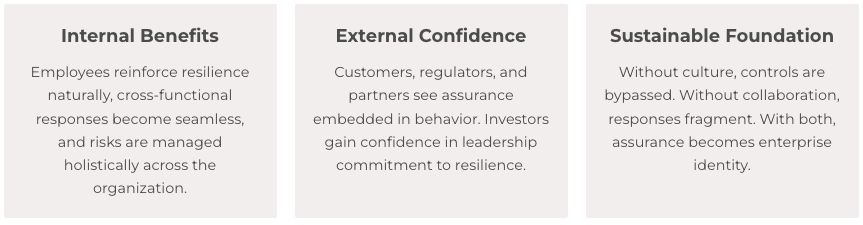 The Culture & Collaboration Domain is where assurance becomes sustainable. The IAMM provides a roadmap for advancing from fragmented responsibility to cultural adoption. By embedding assurance roles, empowering cross-functional groups, recognizing positive behaviors, and reinforcing expectations through leadership, enterprises ensure that assurance is not just implemented but lived as part of their organizational DNA.