Metrics and reporting are often treated as the end stage of assurance and the outputs that executives and boards review to measure performance. In reality, they are much more than that. They are the mechanisms that drive accountability, inform strategy, and reveal whether assurance has been embedded in practice or remains theoretical. Without strong metrics, organizations cannot know if controls are effective, if risks are managed, or if resilience is improving.
The Metrics & Reporting Domain within the Integrated Assurance Maturity Model (IAMM) focuses on building a system of measurement that is not only accurate but also relevant and actionable. It emphasizes that metrics must reflect both technical effectiveness and business impact. Dashboards must provide insight for multiple audiences, from engineers to executives. Reporting must not only describe the past but also influence future behavior.
 Why Metrics & Reporting Matter for Assurance
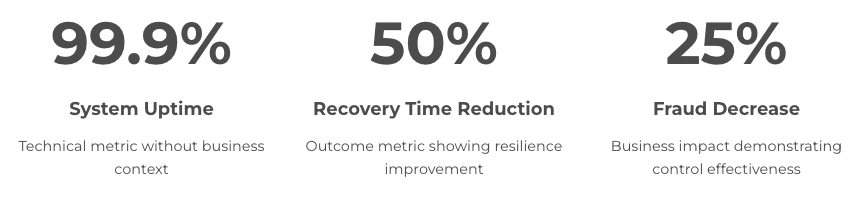
In many enterprises, metrics are easy to produce but difficult to interpret. Dashboards overflow with numbers: system uptime, vulnerability counts, number of incidents closed, percentage of controls in place. These metrics are often isolated, focusing on technical details without context. A server may be up 99.9 percent of the time, but that metric does not reveal whether resilience has been tested under real conditions. A control may be marked as implemented, but that does not confirm that it performs effectively under stress.
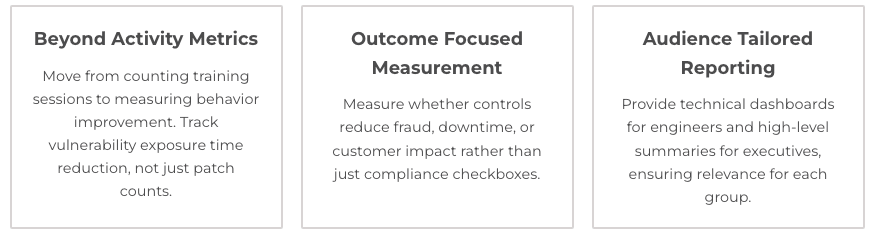
Metrics must move beyond activity and output. They must measure outcomes. For example, instead of counting the number of training sessions delivered, organizations should measure whether employee behavior has improved. Instead of tracking how many vulnerabilities were patched, they should measure the reduction in exposure time. Instead of only tracking compliance with frameworks, they should measure whether those controls reduce fraud, downtime, or customer impact.
The importance of reporting is equally significant. Even the best metrics lose value if they are not communicated in ways that influence decisions. Technical dashboards may be useful for engineers but overwhelming for executives. High-level summaries may inform boards but leave operational teams without guidance. Effective reporting tailors information to its audience, ensuring that each group receives insight that is relevant, actionable, and aligned with its responsibilities.
The Evolution of Maturity in Metrics & Reporting
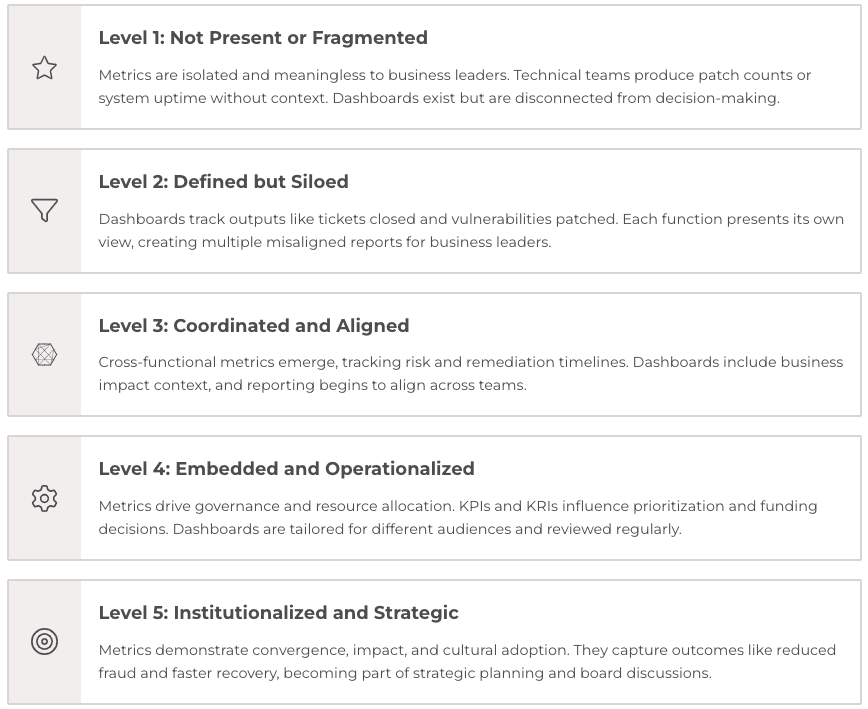
IAMM defines five levels of maturity in this domain, showing how organizations move from isolated metrics to strategic influence.
 Questions for Measuring Maturity in This Domain
To measure maturity, organizations should ask questions such as:
Do assurance metrics measure control effectiveness and business impact, not just coverage?
Are metrics based on real events rather than compliance checkboxes?
Are metrics periodically reviewed and challenged for relevance?
Are dashboards tailored for executive, operational, and technical audiences?
Do metrics influence strategic decisions such as funding and investment?
Are risk thresholds formally defined and used to guide prioritization?
Are metrics used to track convergence across departments?
Are friction points identified through trend analysis?
Are assurance outcomes discussed in executive and board-level reviews?
Are corrective actions tracked, owned, and completed by leadership?
These questions move the discussion beyond activity and into outcomes.
Overcoming Common Barriers
 The Strategic Value of Metrics & Reporting
At higher levels of maturity, metrics and reporting provide strategic value by connecting assurance to business outcomes. For example, a reduction in mean time to remediate vulnerabilities not only improves security but also demonstrates efficiency gains. A decrease in recovery time after incidents not only satisfies operational goals but also shows resilience. Metrics that link assurance to customer trust provide evidence for investor communications. Reporting that highlights cultural adoption demonstrates that assurance is embedded across the enterprise.
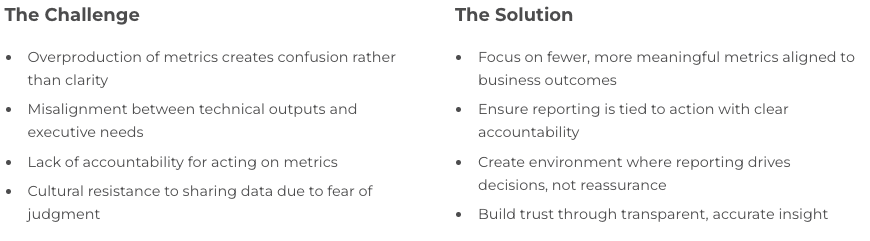
Metrics also create accountability. When assurance outcomes are tracked at the board level, leaders cannot ignore them. When KPIs influence funding decisions, teams are incentivized to improve. When dashboards are shared across functions, silos are broken down. Reporting becomes more than a communication exercise. It becomes a driver of behavior and a reinforcement of culture.
 The Metrics & Reporting Domain defines how assurance is measured, communicated, and acted upon. Weakness here results in dashboards that provide comfort without clarity. Strength results in metrics that drive accountability, influence decisions, and demonstrate resilience. The IAMM provides a roadmap for moving from fragmented reporting to strategic influence, ensuring that assurance is not only visible but also impactful.
Framework Alignment
Metrics and reporting are often overlooked in many frameworks, but several provide valuable guidance that aligns with IAMM. ISO/IEC 27004 establishes methods for measuring the effectiveness of security controls, linking results to organizational objectives. This standard reinforces IAMM’s call for metrics that measure outcomes rather than activity. The NIST CSF Tiers provide a scalable way to report posture, showing whether organizations operate at partial, risk-informed, repeatable, or adaptive levels. These tiers align naturally with IAMM’s maturity levels.
The Balanced Scorecard methodology offers an enterprise-wide approach to aligning strategy with performance measurement. It ensures that assurance metrics are not confined to technical domains but are presented in a language that business leaders and boards can act upon. Similarly, CMMI maturity levels allow organizations to benchmark themselves against external references, adding credibility to assurance reporting.
These frameworks help organizations evolve from fragmented reporting to meaningful accountability. ISO 27004 ensures that metrics are evidence-based, NIST tiers provide a maturity lens, Balanced Scorecard ties outcomes to strategy, and CMMI levels validate progress. Within IAMM, these frameworks create the structure for reporting that informs executives, guides investments, and demonstrates resilience to external stakeholders. By combining them, organizations can move beyond green dashboards that provide reassurance and instead produce defensible metrics that show assurance in action.