Most cybersecurity conversations begin in the wrong place. The discussion usually starts with threats, vulnerabilities, controls, or the latest technology designed to stop an attack. Those topics matter, but they often distract leaders from a much more important question.
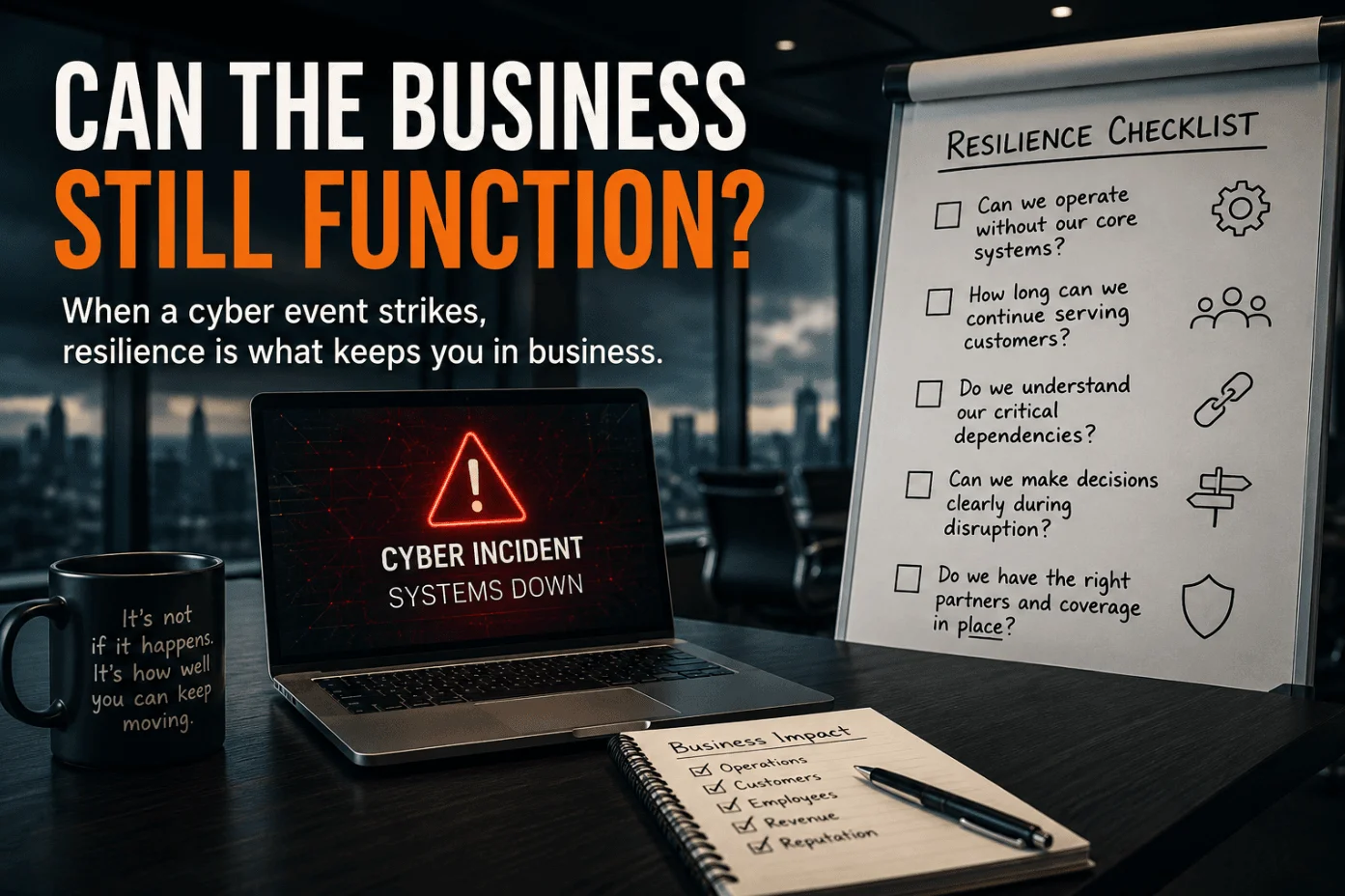
If a cyber event occurs tomorrow, can the business continue to operate?
That question sounds simple until you try to answer it. Most organizations can tell you how many vulnerabilities they patched last month. They can tell you which security tools they purchased and which compliance frameworks they follow. Far fewer can explain how they would process orders, serve customers, pay employees, or maintain revenue if their primary systems became unavailable for several days.
The uncomfortable reality is that many companies have never truly tested the difference between having technology and depending on technology. The distinction only becomes obvious when something stops working.
The Cost Nobody Measures
When executives think about cyber risk, they often picture stolen data, ransomware demands, regulatory penalties, or legal costs. Those concerns are legitimate, but they are not always the expenses that create the greatest damage.
The largest losses frequently come from interruption. Customers who cannot access services begin looking elsewhere. Projects stall. Employees lose productivity. Revenue slows while expenses continue. The financial impact grows even when no data leaves the organization.
A business can survive a technical problem. Recovering from operational disruption is often much harder.
This is why two companies can experience similar incidents and end up with dramatically different outcomes. One returns to normal operations within days while the other struggles for months. The difference is rarely the sophistication of the attack. More often, it comes down to how prepared the organization was to function while recovery was taking place.
AI Changes More Than Security
AI is creating new opportunities for businesses, but it is also changing how risk develops inside organizations. Most discussions focus on AI-generated threats, deepfakes, automated phishing campaigns, and increasingly capable adversaries. Those risks deserve attention, yet they may not be the most immediate challenge facing many companies.
The most significant shift is how AI changes the way work gets done.
Organizations are rapidly introducing AI into customer service, operations, finance, software development, marketing, and decision-making processes. As these tools become embedded in daily operations, they become part of the business itself. Decisions that once required human judgment increasingly rely on systems that many leaders do not fully understand.
The risk is not that AI will suddenly become self-aware or take over the organization. The risk is that companies create dependencies faster than they recognize them. Every new dependency becomes another factor that can influence resilience when something goes wrong.
Why Cyber Insurance Is Asking Different Questions
This changing environment helps explain why cyber insurance underwriting has evolved so dramatically over the last few years. Insurers are no longer focused solely on whether a company has security controls in place. They want to understand how an organization operates. They want to know how critical functions are maintained during disruptions. They want evidence that leadership understands the potential impact of an outage beyond the technical environment.
The reason is straightforward. Insurance carriers are not paying claims because a vulnerability existed. They are paying claims because the vulnerability created a business loss. A ransomware event that disrupts operations for two weeks creates a very different financial outcome than one that is contained within a few hours. The technology may be similar. The business impact is not.
The Decisions That Matter Most
Operational vulnerabilities are rarely created by attackers. They are more often created through ordinary business decisions that seem reasonable at the time. A process becomes dependent on a single platform. Critical knowledge remains with one employee. A vendor becomes deeply embedded in daily operations. A new technology is adopted because it improves efficiency without fully considering what happens if it becomes unavailable.
Individual decisions may not feel risky when they are made and most are driven by good intentions and practical business goals.
The challenge is that risk often accumulates quietly. Dependencies build over time. Assumptions go untested. Workarounds become standard operating procedures. By the time an incident occurs, the organization discovers that the issue was never a lack of security controls. The issue was a lack of understanding about how the business actually functions under stress.
A Different Way to Think About Risk
Cybersecurity is often framed as a battle to prevent bad things from happening. Prevention will always remain important, but it is no longer enough.
The organizations that navigate disruption most effectively tend to focus on a different objective. They spend time understanding how work gets done, where critical dependencies exist, and what must happen to keep serving customers when technology fails. That perspective changes the conversation.
Shift the focus away from technical events and toward business outcomes.
At its core, every cyber event eventually becomes a business event. The question leaders should be asking is not whether an incident will occur. The better question is whether the organization can continue moving forward when it does.