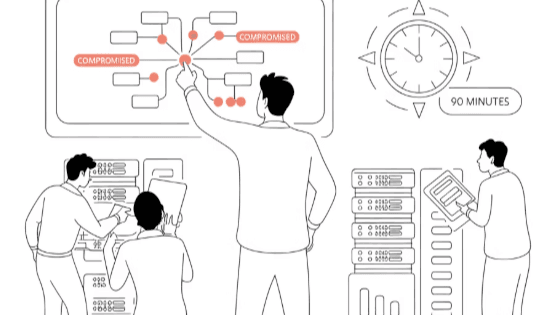
For years, companies have relied on risk assessments that capture a moment in time. A team reviews controls, auditors check compliance, and a report is delivered. Leaders read the findings, accept the conclusion, and assume stability until the next cycle. On the surface, this seems reasonable. In practice, it creates a false sense of safety. Risk is never fixed. It shifts constantly, shaped by new technology, creative adversaries, changing rules, and the daily movement of people and processes inside the business. Treating risk like a photograph misses the reality that it is more like a film that never stops rolling.
This lesson came into sharp focus for me years ago when I was working as a PCI Qualified Security Assessor. I had just completed a PCI DSS assessment for a client and handed over the Report on Compliance. While I shared it, I told them the uncomfortable truth that the report had already expired. It was valid only for the point-in-time that we did testing and performed the review. The moment that configurations shifted, or employees found ways to work around controls, the picture we had captured was already out of date. The room went quiet. They had invested time, effort, and money for a report that could not keep pace with the reality of their environment. That experience reinforced for me what I now tell boards and executives, “risk is never static, and assurance cannot stop at a single review.”
This way of thinking is built into how many organizations operate. Audits and certifications are set up to prove compliance at certain points in time. They provide comfort, but they do not keep pace with the real world. At the moment of review, everything may appear in order, yet conditions are already changing. A new exploit may be circulating. A supplier may be cutting corners. A service provider may have quietly adjusted a system. By the time the board sees the report, the picture no longer matches reality. The space between what is documented and what is happening in real time is the risk gap, and that gap only widens with every passing day.
Reports make this gap harder to see because they present conclusions as certain. Controls are listed as effective, programs as compliant, risk levels as low. Leaders naturally trust these statements. What is harder to grasp is how quickly the ground can shift. An attack may already be unfolding in a partner system. An employee may have bypassed a safeguard to save time. A simple update to a system may have created an opening that attackers can use. That kind of change will never appear in the report, because the report only reflects the moment when it was written.
Why Snapshots Fail
Risk should be viewed as something that moves. It is not fixed in place. It grows, fades, and changes shape as business processes, systems, and environments evolve. Cloud resources can be spun up in minutes. New code can be deployed several times a day. Data flows constantly between internal systems, partners, and third-party platforms. Each movement creates new conditions where risk can appear.
AI adds even more urgency. In the past, attacks took advantage of simple mistakes like misconfigured systems or software that had not been updated. AI has changed the game. It can produce fake emails that look genuine, create audio or video that convincingly imitates company leaders, and even tamper with the models used to build and run new technology. These threats already exist. They are not theories. The speed and creativity of AI attacks make traditional assessments obsolete. By the time a report is completed, an AI system could already have been used to uncover and exploit a weakness the enterprise did not know it had.
To keep pace, risk has to be treated as a moving signal. The goal is not simply to show compliance at a single moment, but to maintain awareness as conditions change. AI is both a tool for innovation and a force that multiplies the speed at which risks appear. A model that is launched without proper oversight can introduce bias, expose sensitive data, or be used in ways that harm the organization. Once in use, those risks do not wait for the next audit. They continue to evolve, just as the models themselves continue to learn.
Making Risk Visible
This is why Integrated Assurance is so important. It treats assurance as a practice that lives inside daily operations, rather than a project that ends with a certificate. Evidence is generated as work is performed. Controls are monitored constantly rather than tested once a year. Information flows across governance, operations, security, and business functions so that the enterprise is working from a shared picture of reality.
Traditional static thinking is dangerous in risk management. Your organization can pass an audit in January and be hit with ransomware in March. The attack could succeed because of a configuration introduced weeks after the review. The financial cost could be severe, but the loss of trust may be even greater. Regulators will raise questions. Customers will start to doubt reliability. Partners may look elsewhere.
What if, as a supplier, your recent assessment showed that you met the minimum requirements for security controls, but a few weeks later your company cut security budgets due to financial strain. Fast forward six months and imagine that your company became the weak link in the supply chain that opened the door to attackers to a large and important customer. A point-in-time assessment could not predict that decline.
These scenarios are even more concerning when AI is added. A ransomware campaign that uses AI can change its methods while the attack is still in progress, making defense more difficult. A supplier using AI to generate fake compliance documents could pass a review while hiding critical weaknesses. Traditional assessments cannot counter an adversary that adapts continuously and at scale.
The Integrated Assurance model changes this dynamic. By embedding assurance into the flow of work, signals are captured as they occur. When a control is bypassed, a notification is triggered. When a supplier begins to fail, the weakness is visible before it cascades. When an AI model drifts from expected behavior, the evidence surfaces immediately, tied to the impact it creates. Risk becomes visible and actionable in real time, not months later.
Building on Trust
This shift is not only about systems. It is about culture. Employees must understand that assurance is part of their role. Leaders must show that risk information guides decision making. Boards must shift from reading reports that describe the past to engaging with evidence that reflects the present. When this culture takes hold, assurance is no longer a scheduled activity. It becomes a continuous habit that strengthens resilience and allows the enterprise to adapt faster.
The benefit is more than defense. Continuous assurance creates the conditions for safe transformation. Cloud migrations, AI deployments, and modernization projects can move forward with greater confidence. The organization does not have to choose between speed and safety. It can achieve both, because assurance moves alongside the change.
At the center of this approach is trust. Trust does not come from a certificate that describes compliance from last quarter. It comes from the ability to prove control in the present moment. Customers, regulators, partners, and employees all look for this proof. Trust builds when people can see proof every day. Integrated Assurance supports this by connecting oversight with daily operations and by keeping watch on AI-related risks as they appear, instead of waiting months to discover them.
The shift to continuum thinking requires effort. Leaders must evolve from relying on static reviews to working with real-time signals. Systems must produce evidence as work is done. Risk officers must move from writing documents to curating streams of operational intelligence. Adversaries are already moving continuously, and AI accelerates their capabilities. Markets change daily, and regulators expect ongoing oversight. Organizations that remain tied to static assessments will not keep up.
Risk as a continuum is not an idea to prepare for. It is the present reality of business. Every process, every supplier, every system, and every AI model exists in motion. Risk changes with them. Turning away from constant change creates blind spots that often become full problems. Paying attention to it builds strength, helps the business respond faster, and creates confidence with customers and partners. Integrated Assurance makes this possible by weaving assurance into everyday work and treating risk as something that flows rather than something frozen in a report.
The result is more than stronger defense. It is the ability to adapt with speed, to transform with confidence, and to earn trust through daily proof. Risk as a continuum is not just survival strategy. It is the foundation for relevance in a world where AI drives both opportunity and threat.